Fire Safety Basics in CRM-III
A small spark can become a major industrial fire when fuel, heat and oxygen come together. Recognising fire hazards early and responding correctly can protect lives, equipment and plant operations.
1. How does a fire start?
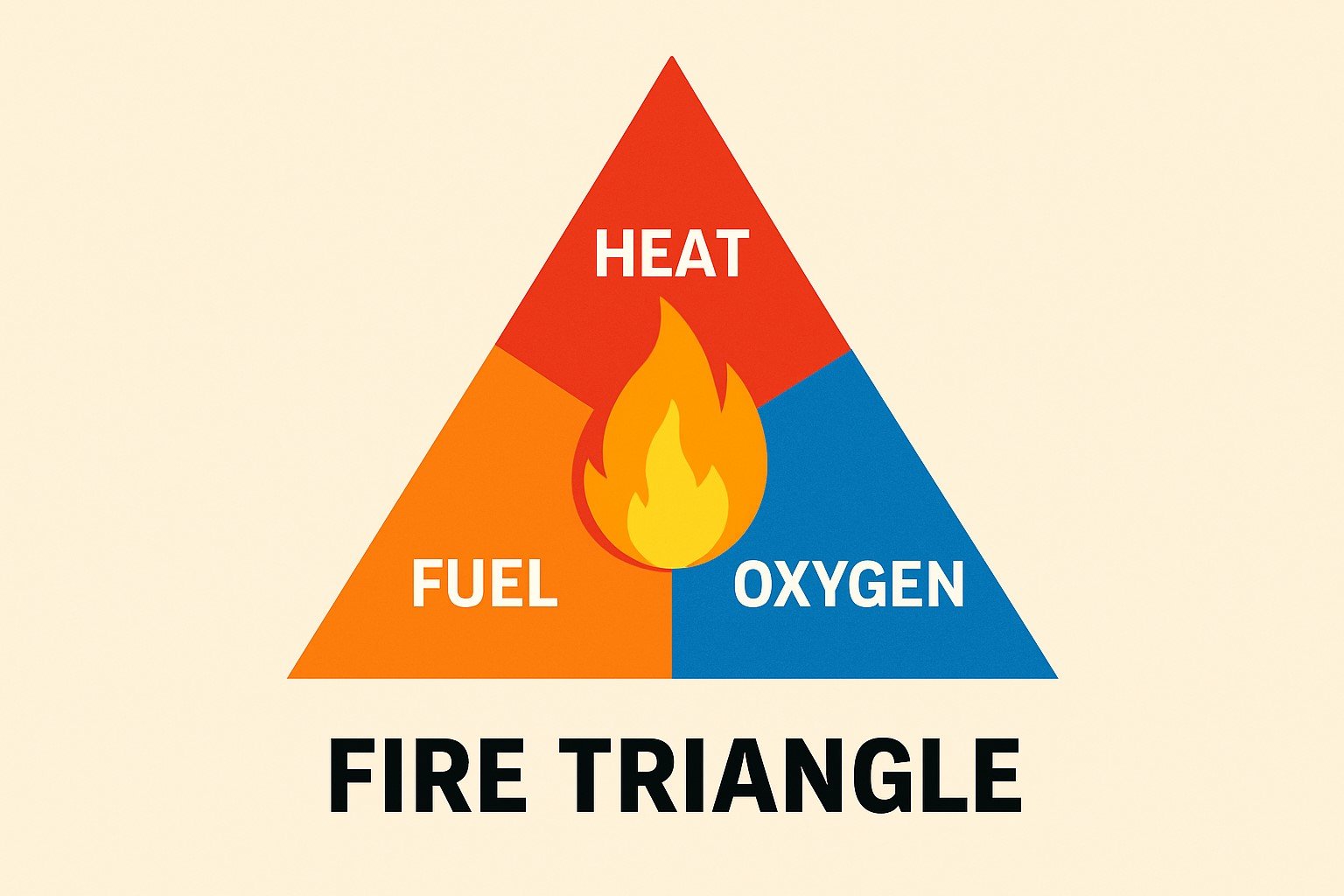
Fire generally requires three elements, known as the Fire Triangle:
- Fuel: Oil, grease, LPG, hydrogen, cables, packaging and other combustible materials.
- Heat: Welding sparks, hot surfaces, electrical faults, friction or open flames.
- Oxygen: Normally available in the surrounding air.
Removing or controlling one of these elements can help prevent or extinguish a fire, provided the method is appropriate for the material involved. Some fires can also sustain combustion through chemical chain reactions.
2. Common fire hazards in CRM-III
- Electrical equipment: Damaged insulation, loose connections, overloaded circuits and electrical faults.
- Oil and grease: Hydraulic oil, lubricants and oil-soaked waste exposed to hot surfaces or sparks.
- Hot work: Welding, gas cutting, grinding and maintenance activities that produce sparks.
- Flammable gases: Hydrogen, LPG and other combustible gas systems where present.
- Combustible materials: Cable insulation, packaging, cloth, waste and materials stored near heat sources.
- Poor housekeeping: Oil spills, accumulated waste, blocked access routes and obstructed firefighting equipment.
In areas such as PLTCM, BAF, HDGL, SPM and supporting facilities, identify the actual hazards present at the work location before starting the job.
3. Types of fire
Fire classification depends on the applicable standard. Always check the fire classification and permitted applications printed on the extinguisher and follow the plant's approved system.
| Fire type | Examples | Important precaution |
|---|---|---|
| Ordinary solid materials | Paper, cloth, wood and many plastics. | Use an extinguisher suitable for solid combustible materials. |
| Flammable liquids | Oil, paint, solvents and fuel. | Do not direct a forceful water jet onto burning liquid; it may spread the fire. |
| Flammable gases | LPG, hydrogen and other combustible gases. | Avoid approaching the leak. A gas fire must not be extinguished unless the fuel supply can be safely controlled by authorised personnel. |
| Electrical equipment | Energised motors, panels, cables and control equipment. | Do not use water or an extinguisher unsuitable for energised electrical equipment. Electrical isolation must be performed by authorised personnel. |
| Combustible metals | Specific reactive metals, such as magnesium or sodium, where present. | Use only a suitable specialist extinguishing agent. Water can cause dangerous reactions with some metals. |
| Cooking oils and fats | Deep-fat cooking equipment, where present. | Never throw water onto burning oil or fat. |
4. What should you do when you discover a fire?
- Raise the alarm immediately. Follow the established CRM-III/plant emergency reporting procedure.
- Inform others and keep clear. Warn nearby employees and prevent people from entering the affected area.
- Evacuate when required. Use the designated escape route and proceed to the assigned assembly point.
- Use an extinguisher only if safe. The fire must be small and in its early stage; you must be trained or authorised, have the correct extinguisher and maintain a clear escape route.
- Leave immediately if conditions worsen. Heavy smoke, rapid fire growth, explosions, a gas leak or uncertainty about the hazard means you should retreat and let the emergency team respond.
Never put yourself at risk to save equipment or production. Do not enter a smoke-filled area or attempt to fight a fire that is spreading.
5. Basic fire-prevention precautions
- Keep oil, grease, waste and combustible materials away from hot surfaces and ignition sources.
- Follow the hot-work permit, gas checks, fire-watch and post-work inspection requirements.
- Report damaged cables, overheating equipment, unusual smells, sparks and leaking gas immediately.
- Keep fire extinguishers, hydrants, alarms, emergency exits and access routes unobstructed.
- Store and handle gas cylinders according to approved procedures.
- Never smoke or use unauthorised flames in designated restricted areas.
- Know the nearest alarm point, safe escape route and assembly point for your work area.
6. Remember
Recognise the hazard. Raise the alarm. Protect people. Evacuate when necessary.
Fire extinguisher selection and operation will be covered in separate lessons. Do not attempt firefighting beyond your training or the limits of the emergency procedure.
Training note: This lesson supports safety awareness and does not replace current approved Bokaro Steel Plant/CRM-III fire safety procedures, emergency instructions or practical training.