Permit to Work (PTW): Safe Work Authorization in CRM-III
Safety first. Production only when it is safe.
In a Cold Rolling Mill, production equipment may contain moving rolls, high electrical energy, hydraulic pressure, pneumatic energy, hot surfaces, hazardous gases and heavy suspended loads. A maintenance activity that appears routine can become dangerous if the work area is not properly assessed and prepared.
The Permit to Work (PTW) system is a formal method of authorising specified work after the hazards, required precautions, responsibilities and necessary controls have been reviewed. It helps the concerned operating, maintenance and safety personnel coordinate before work begins.
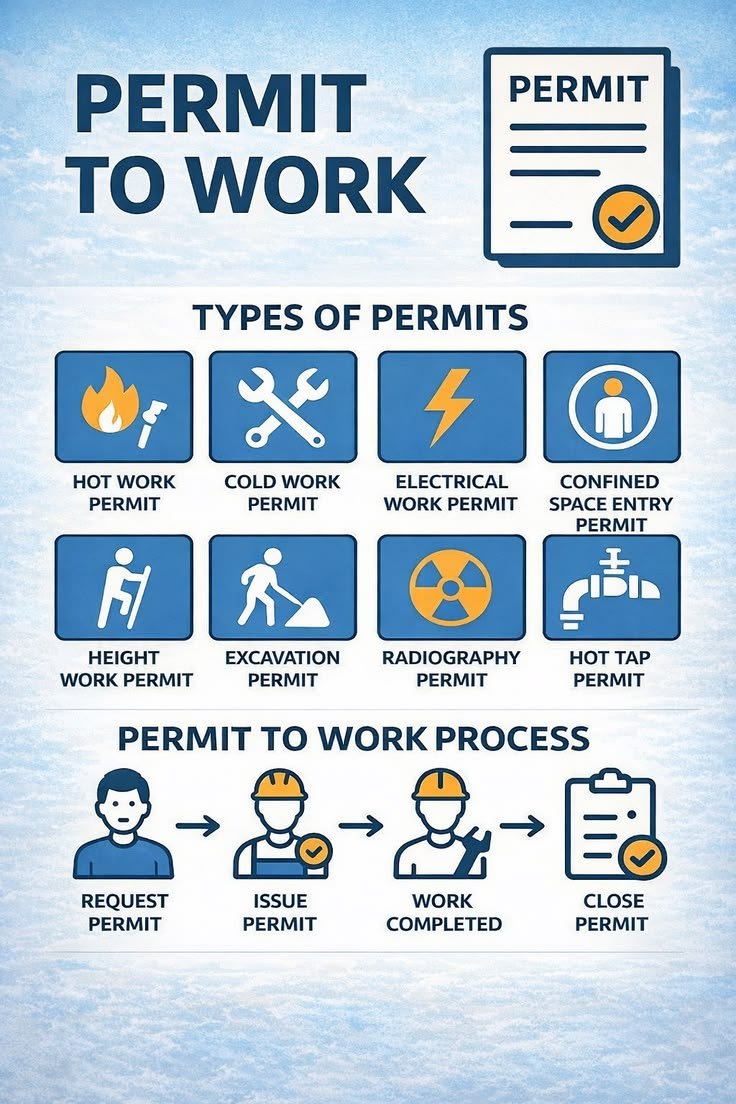
1. Why is PTW important in CRM-III?
CRM-III includes PLTCM, BAF, HDGL, SPM, H₂ Plant, CPL, TLIL and supporting facilities such as cranes, water supply, TTP, ETP, the roll bearing shop and gas utilities. Each area has different hazards, and a single maintenance job may affect production, utilities and adjacent work groups.
- PLTCM: Work near roller tables, pinch points, strip movement, hydraulic systems and electrical drives.
- BAF: Maintenance involving furnace equipment, hot surfaces, combustion-related systems and hazardous atmospheres.
- HDGL: Work around moving strip, rolls, high-temperature equipment, molten zinc areas and associated gas systems.
- SPM, CPL and TLIL: Work involving rotating rolls, strip tension, cutters, knives, coil handling and automatic equipment sequences.
- H₂ Plant and gas utilities: Work involving hydrogen or other plant gases, pipelines, valves and potential fire, explosion or asphyxiation hazards.
- Crane and roll bearing shop: Lifting operations, suspended loads, heavy components, rotating machinery and stored mechanical energy.
- Water supply, TTP and ETP: Pumps, electrical equipment, pipelines, tanks, chemical hazards and potentially restricted-access spaces.
PTW helps the responsible personnel identify the hazards of the particular job and determine the controls required before authorising work. A permit is not a guarantee that an area is safe; the specified precautions must actually be implemented and maintained.
2. What is a Permit to Work?
A Permit to Work is a documented authorisation for a defined task, at a specified location, within an approved period and subject to stated safety conditions. It records the work scope, hazards, required precautions, responsible persons and applicable restrictions.
Depending on the task and Bokaro Steel Plant's approved procedures, work may require a general work permit or a specific authorisation for activities such as hot work, confined-space entry, work at height, excavation or electrical work.
Remember: A work permit does not replace equipment isolation, gas testing, risk assessment, competent supervision, required PPE or other mandatory controls. It confirms the applicable controls and authorisation requirements for the job.
3. The PTW process: from planning to handover
Step 1 — Define the job clearly
Identify the exact equipment, location, task, work boundaries and expected duration. For example, “maintenance on a PLTCM roller table” is not sufficiently precise unless the particular section and work scope are clearly identified. Confirm the correct equipment identification with the authorised operating personnel.
Step 2 — Identify hazards and assess the risk
Consider moving machinery, electrical energy, hydraulic and pneumatic pressure, stored energy, hot surfaces, hazardous gases, chemicals, falling objects, lifting operations and nearby production activities. Assess how the job could affect other teams or adjacent equipment.
Step 3 — Establish the required controls
Determine which equipment must be stopped, which energy sources must be isolated, whether depressurisation or draining is required, and whether barriers, ventilation, gas testing, fire protection, fall protection or other precautions are necessary. Apply the approved site procedures and task-specific risk assessment.
Step 4 — Isolate and verify
Where required, authorised personnel must isolate the relevant energy sources under the applicable isolation procedure. This can include electrical, hydraulic, pneumatic, mechanical, thermal and other hazardous energy. Stored energy must be safely released or restrained, and the effectiveness of isolation must be verified using the approved method before exposure to the hazard.
Step 5 — Inspect the work area and authorise the permit
The designated authorised persons must verify that the work scope, precautions, isolation status, personnel and required supporting authorisations are in order. Where gas testing, confined-space controls or other specialist checks are required, these must be completed by competent authorised personnel in accordance with the applicable procedure.
Step 6 — Conduct a pre-job briefing
Explain the work scope, hazards, control measures, emergency arrangements, communication method and each person's responsibilities to the work team. Ensure that employees and contractors understand the restrictions and stop-work conditions before starting.
Step 7 — Carry out the work within the permit conditions
Work only within the authorised scope, location and validity period. Maintain barricades, warning signs, PPE, fire protection and other required safeguards. Do not bypass guards or interlocks, alter the scope, or start additional work without the required review and authorisation.
Step 8 — Stop and reassess when conditions change
Stop work if an unexpected hazard arises, gas conditions change, isolation is uncertain, an alarm occurs, the work scope changes, or the permit expires or is suspended. Inform the responsible authority and resume only after the situation has been assessed and the required authorisation is restored.
Step 9 — Complete the job and hand over safely
Remove tools, scrap and temporary materials; account for personnel; and confirm that guards and safety devices are restored as required. Report outstanding defects and ensure the equipment is formally handed back to the authorised operating personnel. Isolation removal and re-energisation must follow the approved procedure and must never be done merely because the physical work appears complete.
4. Practical CRM-III example: maintenance on a PLTCM roller table
Suppose a maintenance team needs to replace a damaged component near a PLTCM roller table. The line's movement, automatic operating sequences, electrical drives and possible hydraulic or pneumatic energy can expose workers to serious injury.
- The responsible operating and maintenance personnel define the exact work location and scope.
- The team identifies the hazards, including unexpected equipment movement and stored energy.
- The equipment is stopped and the required isolation is carried out by authorised personnel under the approved site procedure.
- Stored energy is addressed, and isolation effectiveness is verified using the specified method.
- The work area is secured, affected personnel are informed and the permit is authorised after the required checks.
- The team carries out only the approved work and stops if conditions differ from those assessed.
- After completion, the area and equipment are checked, personnel are accounted for, and formal handover is completed before authorised restoration.
Key learning: A stopped roller table is not automatically a safe roller table. Unexpected start-up, stored energy or an incorrect isolation can still create a serious hazard.
5. PTW and LOTO: related but different
PTW authorises and controls the defined work. LOTO (Lockout/Tagout) is part of the energy-isolation process used to prevent hazardous energy from being released or equipment from being unexpectedly energised, as required by the applicable procedure.
For example, maintenance on a pump in a CRM-III utility area may require a work permit and isolation of its electrical supply, as well as control of pressure in connected pipelines. The exact requirements depend on the equipment, task and approved site procedure.
Neither a permit form nor a warning tag alone makes hazardous equipment safe. The specified isolation, locking, stored-energy control and verification steps must be completed by authorised personnel.
6. Common PTW failures to avoid
- Starting work before the required permit is authorised.
- Using a permit for the wrong equipment, location, task or work scope.
- Assuming that stopping equipment at a control panel is equivalent to energy isolation.
- Beginning work without completing required isolation verification or gas testing.
- Ignoring adjacent operations, contractors or other teams affected by the job.
- Continuing when the permit has expired, been suspended or conditions have changed.
- Allowing unauthorised changes to the work scope or removing safeguards without approval.
- Restoring equipment without clearance, personnel accountability and formal handover.
7. Responsibilities: everyone has a role
- Authorising authority: Ensures that the permit is authorised by the designated competent person under the applicable procedure.
- Operating personnel: Identify the correct equipment, coordinate shutdown and isolation, communicate operating restrictions and manage the authorised handover.
- Maintenance supervisor or work leader: Confirms the work scope, team competence, precautions, tools and compliance with permit conditions.
- Employees and contractors: Understand the hazards, follow the authorised controls, use required PPE and stop work when conditions become unsafe.
- Safety personnel, where required: Provide the designated checks, advice or verification specified by the site procedure.
Only personnel authorised under the applicable site procedure may perform permit approval, isolation, testing or other controlled functions.
8. Before work starts: a practical safety check
- The equipment and work location have been positively identified.
- The job scope and hazards have been reviewed with the team.
- The required permit and supporting authorisations are valid.
- Required isolations and verification have been completed.
- Gas tests, confined-space controls, lifting arrangements or other specialist controls have been completed where applicable.
- Required PPE, tools, barricades, signs and emergency arrangements are in place.
- All team members understand their responsibilities and the stop-work conditions.
This check supports the approved PTW process; it does not replace the actual permit, required signatures or mandatory site-specific checks.
9. Stop-work principle
Every worker must raise a concern and stop the affected work when a serious hazard is identified or required controls are missing, ineffective or uncertain. Inform the responsible supervisor or authorised operating personnel. Do not restart until the hazard has been reassessed and the required controls and authorisation are confirmed.
10. Final takeaway
In CRM-III, safe maintenance depends on more than a signed document. It requires clear work planning, hazard identification, effective isolation, communication, supervision and controlled handover. Whether the task is on PLTCM, BAF, HDGL, SPM, CPL, TLIL, H₂ Plant, a crane or a utility system, follow the current approved Bokaro Steel Plant procedures and the instructions of authorised personnel.
Remember: No required authorisation, no start. No verified safety controls, no work. No formal handover, no return to service.
This learning material is for awareness and training. It does not replace Bokaro Steel Plant's approved Permit to Work, isolation, gas testing, confined-space, lifting or other site-specific procedures.