🏭 PLTCM Safety — Safe Operation and Hazard Prevention
Safety message: Never place your hands, body or tools near a moving steel strip, rotating roll or operating shear.
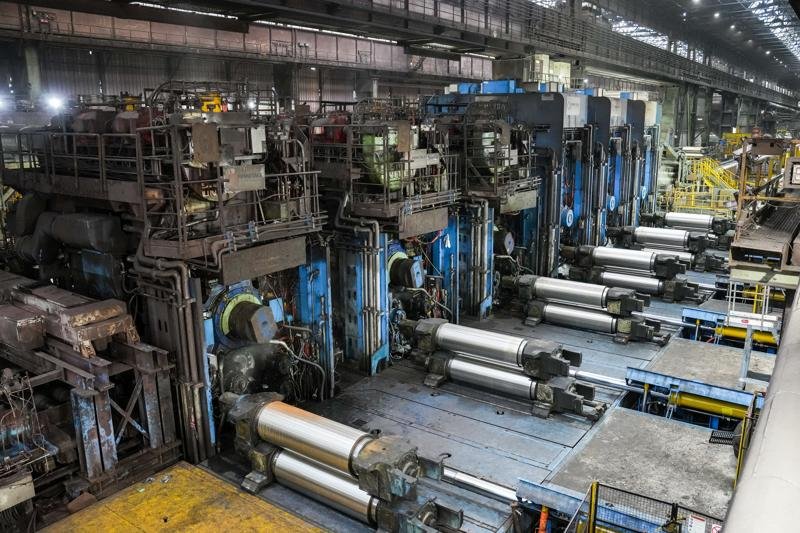
The Pickling Line and Tandem Cold Mill (PLTCM) combines surface cleaning of steel strip with continuous cold rolling. The line includes coil handling equipment, an uncoiler, crop shear, welding equipment, looper, bridle rolls, rolling stands, drives, hydraulic systems and a recoiler.
These operations involve heavy moving coils, sharp strip edges, rotating machinery, stored energy and, in the pickling section, chemical exposure. Understanding these hazards is essential for every employee working on or near the line.
1. Understand the PLTCM Process
- Coil loading and uncoiling: The incoming coil is positioned and fed into the line.
- Pickling: Acid treatment removes oxide scale from the steel surface. Chemical and fume hazards must be controlled.
- Crop shearing and welding: Strip ends are prepared and joined to enable continuous processing.
- Looper and bridle rolls: These sections manage strip accumulation, movement and tension as designed.
- Tandem mill stands: Steel strip passes through successive rolling stands to reduce thickness.
- Recoiling: The processed strip is wound into a coil for the next operation.
2. Major PLTCM Hazards
⚠️ A. Coil Handling and Coil Cars
- Heavy coils can roll, shift, swing or fall if not properly secured.
- Keep clear of moving coil cars and the path of suspended loads.
- Never stand between a moving coil and a fixed structure.
- Use designated walkways and approved coil-handling procedures.
⚠️ B. Strip Threading and Sharp Edges
- Steel strip edges can cause severe cuts.
- Strip can move suddenly, whip or recoil, particularly during abnormal conditions or a strip break.
- Never guide moving strip by hand or reach into the line to correct alignment.
- Use only approved threading tools and the authorised threading procedure.
- Before manual intervention, ensure the line is in the prescribed safe state and required isolation is complete.
⚠️ C. Crop Shear and Welding Equipment
- Crop shears create severe cutting and crushing hazards.
- Welding equipment may involve automatic movement, electrical energy and hot components.
- Keep hands and tools outside the operating zone. Never bypass guards or interlocks.
- Do not remove scrap or adjust strip ends until the equipment has been made safe under the approved procedure.
- Only trained and authorised personnel may operate or maintain this equipment.
⚠️ D. Looper, Bridle Rolls and Pinch Points
- Moving strip and rotating rolls can trap hands, clothing and tools.
- Looper movement can create unexpected changes in strip position and tension.
- Never enter a looper pit, reach between rolls or cross a moving strip.
- Use designated access routes and obey barriers, warning signs and operating instructions.
- Entry into restricted areas for inspection or maintenance requires the prescribed authorisation and isolation.
⚠️ E. Tandem Mill Stands and Strip Breaks
- Mill stands, drive mechanisms and rolls create entanglement, crushing and pinch-point hazards.
- A strip break can cause sudden movement, whipping or loose strip ends.
- Do not approach a broken or tangled strip until the operator has made the area safe.
- Never attempt to remove trapped strip or scrap while the equipment is moving.
- Follow the approved recovery procedure and restart only after required checks and clearance.
⚠️ F. Hydraulic and Electrical Energy
- Hydraulic systems may remain pressurised after equipment stops.
- Electrical drives and automatic systems can cause unexpected movement if isolation is incomplete.
- Before maintenance, apply the approved lockout/tagout procedure, isolate relevant energy sources, release stored energy where required and verify the safe condition.
- Only authorised personnel may work on electrical panels or hydraulic systems.
- Never check a high-pressure oil leak with your hand.
⚠️ G. Pickling Chemicals
- Acid contact can cause serious chemical burns; fumes may also be hazardous.
- Follow the approved chemical-handling procedure and wear the specified chemical-protection PPE.
- Report leaks, damaged pipes, unusual fumes or defective extraction systems immediately.
- Know the location of emergency showers, eyewash facilities and the designated emergency route.
- Do not attempt chemical spill response unless trained and authorised.
3. Essential Safe Working Practices
- Follow the SOP: Operate equipment only when trained and authorised.
- Check before starting: Confirm required guards, interlocks, alarms and emergency-stop devices are in service according to the checklist.
- Keep clear of danger zones: Respect barriers and stay away from moving strip, rolls, shears, coil cars and suspended loads.
- Maintain communication: Follow control-room instructions and coordinate with affected personnel before starting or stopping equipment.
- Use the correct PPE: Wear the PPE specified for the work area and task. The plant PPE matrix and approved procedure take priority.
- Do not bypass safeguards: Never defeat an interlock or remove a guard to save time.
- Isolate before maintenance: Apply the required isolation, lockout/tagout and zero-energy verification before intervention.
- Report defects: Inform the shift in-charge about oil leaks, damaged guards, unusual noise, faulty sensors or unsafe access.
- Keep access clear: Do not block walkways, emergency exits, firefighting equipment or electrical panels.
4. What to Do During Abnormal Conditions
- If the strip breaks, becomes tangled or moves abnormally, follow the approved line-stop and recovery procedure.
- Warn nearby personnel and keep clear of the strip path and moving equipment.
- Report the condition to the operator or control desk immediately.
- Do not enter a looper, reach into a mill stand or remove trapped strip without the required authorisation and isolation.
- Restart only after the cause has been addressed, the area is clear and authorised personnel have given clearance.
5. Practical CRM-III Safety Scenario
Situation: During operation, a strip breaks near a bridle roll. A worker considers pulling the loose strip away by hand.
What should the worker do?
- Do not touch or pull the moving or tensioned strip.
- Inform the operator or control desk and follow the approved stopping procedure.
- Keep people away from the danger zone.
- Wait until the equipment and stored energy are made safe under the approved procedure before authorised recovery work begins.
6. Quick Knowledge Check
- Why must moving strip never be guided by hand?
- What hazards are associated with crop shears and rotating bridle rolls?
- What should you do if the strip breaks near a mill stand?
- Why is isolation necessary before maintenance?
- What should you do if you notice an acid leak or a defective guard?
Key Takeaway
Stay clear of moving strip. Respect pinch points. Isolate before intervention. Communicate before restart.
Reference: Ministry of Steel, Government of India, Process Based Safety Guidelines for Iron & Steel Sector, Doc. No. SG/38, Rev. 00, effective 12 June 2024.
```