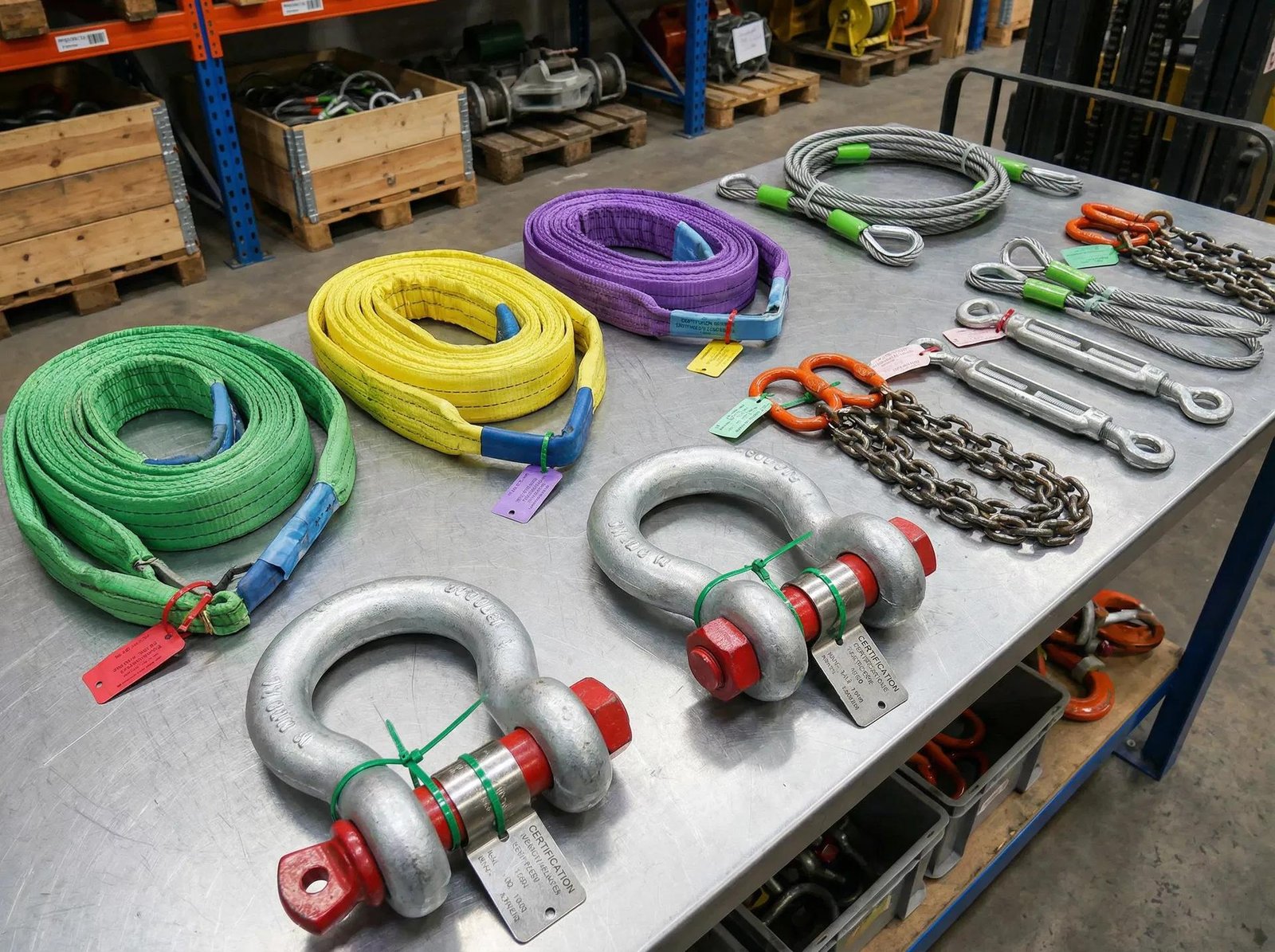
🏗️ LIFTING TOOLS, SLINGS AND WIRE ROPES
A crane is only as safe as the lifting gear attached to the load.
1. What Are Lifting Tools and Tackles?
Lifting gear connects the crane or hoist to the load. Selecting the wrong equipment or using damaged gear can cause the load to fall.
- Wire rope sling: A steel-wire rope assembly used to lift loads.
- Chain sling: A chain assembly designed for lifting.
- Synthetic sling: A textile sling used where its rated capacity and material are suitable.
- Hook: Connects the lifting arrangement to the load or sling.
- Shackle: Connects lifting components using a rated pin and body.
CRM-III example: When lifting a motor, roll or maintenance component, the lifting arrangement must suit the load's weight, shape, lifting points and surrounding conditions.
2. The Golden Rules Before Lifting
- Know the load's weight before lifting.
- Check the rated capacity of every component in the lifting arrangement.
- Use only identifiable, approved equipment suitable for the intended lift.
- Inspect the equipment before use and follow the required periodic inspection schedule.
- Make sure the load is stable and the sling is correctly positioned.
- Never knot a wire rope or use makeshift arrangements to lift a load.
- Never lift using the tip of a hook; use the intended load-bearing area.
3. Wire Rope Inspection — What to Look For
Before use, look for signs that may indicate the rope has lost strength or become unsafe.
| Warning sign | Why it matters | Action |
|---|---|---|
| Broken wires | Can indicate wear or loss of strength | Stop using it and have it assessed against the applicable rejection criteria. |
| Kinks or bird-caging | Rope strands may be distorted | Remove it from use pending competent assessment. |
| Corrosion or heavy wear | May reduce the rope's strength | Report and remove from service if it fails inspection criteria. |
| Reduced diameter or core damage | May indicate internal or external deterioration | Do not use until assessed by a responsible, competent person. |
| Damage near end fittings | Connection failure can cause the load to fall | Stop use and report the defect. |
| Heat exposure | Excessive heat can reduce sling strength | Report the exposure and have the sling assessed before reuse. |
IPSS learning point: The standard states that wire ropes used for lifting should be inspected by a responsible person at least once every three months. This periodic inspection does not replace the required pre-use checks.
4. Chain Slings — Important Checks
- Look for stretched, twisted, cracked, damaged or heavily worn links.
- Check connecting components and fittings for visible defects.
- Do not use improvised repairs, knots or unauthorised modifications.
- Keep the chain correctly aligned; do not use a damaged or twisted arrangement.
- Report any suspected defect and prevent further use until it has been assessed.
IPSS rejection criteria for chains: The standard specifies removal from service if wear at any point of a chain link exceeds a 10% reduction in diameter, or if chain stretch exceeds 5% of its original length.
5. Slings, Hooks and Shackles — Safe Handling
- Slings: Check for cuts, abrasion, broken wires, distortion or other damage relevant to the sling material.
- Hooks: Check for cracks, deformation and damage to the hook's safety latch, where fitted.
- Shackles: Use the correct rated shackle and pin. Check for distortion, damage or unsuitable connections.
- Connections: Make sure components are properly seated and secured before taking the load's weight.
- Load balance: Position slings so the load remains stable and cannot slip out during lifting.
Do not decide that damaged equipment is safe simply because it can still carry a load. Follow the applicable standard, manufacturer's criteria and plant inspection procedure.
6. Common Unsafe Practices
- Using lifting gear with no readable identification or capacity information.
- Using a rope or sling with visible damage.
- Using a knot to shorten or repair a wire rope.
- Exposing a sling to excessive heat without reassessment.
- Using the wrong sling for the load or lifting arrangement.
- Continuing work after a defect has been noticed.
7. What Should You Do If You Find a Defect?
- Stop: Do not start or continue the lift with suspected defective equipment.
- Separate: Prevent the equipment from being used again.
- Report: Inform the supervisor or responsible inspection person.
- Identify: Follow the site's process for marking, tagging or segregating defective gear.
- Return to service only after approval: The equipment must be assessed and accepted under the applicable procedure.
8. 🧠 Learning Bites
- Learning Bite 1: Check lifting gear before every use.
- Learning Bite 2: Broken wires, kinks, bird-caging and corrosion are warning signs.
- Learning Bite 3: Never use a wire rope with a knot or an unauthorised repair.
- Learning Bite 4: A chain link worn by more than 10% of its diameter must be removed from service under the cited IPSS criteria.
- Learning Bite 5: A chain stretched by more than 5% of its original length must be removed from service under the cited IPSS criteria.
- Learning Bite 6: If you are unsure whether lifting gear is safe, do not use it—report it for assessment.
Remember
Identify the gear → Check its capacity → Inspect for damage → Use it correctly → Remove defective gear from service.
This awareness lesson summarises selected points from SAIL/IPSS 1-11-027-16. Use the complete standard, manufacturer instructions and current BSL/CRM-III inspection procedures for actual acceptance or rejection decisions.